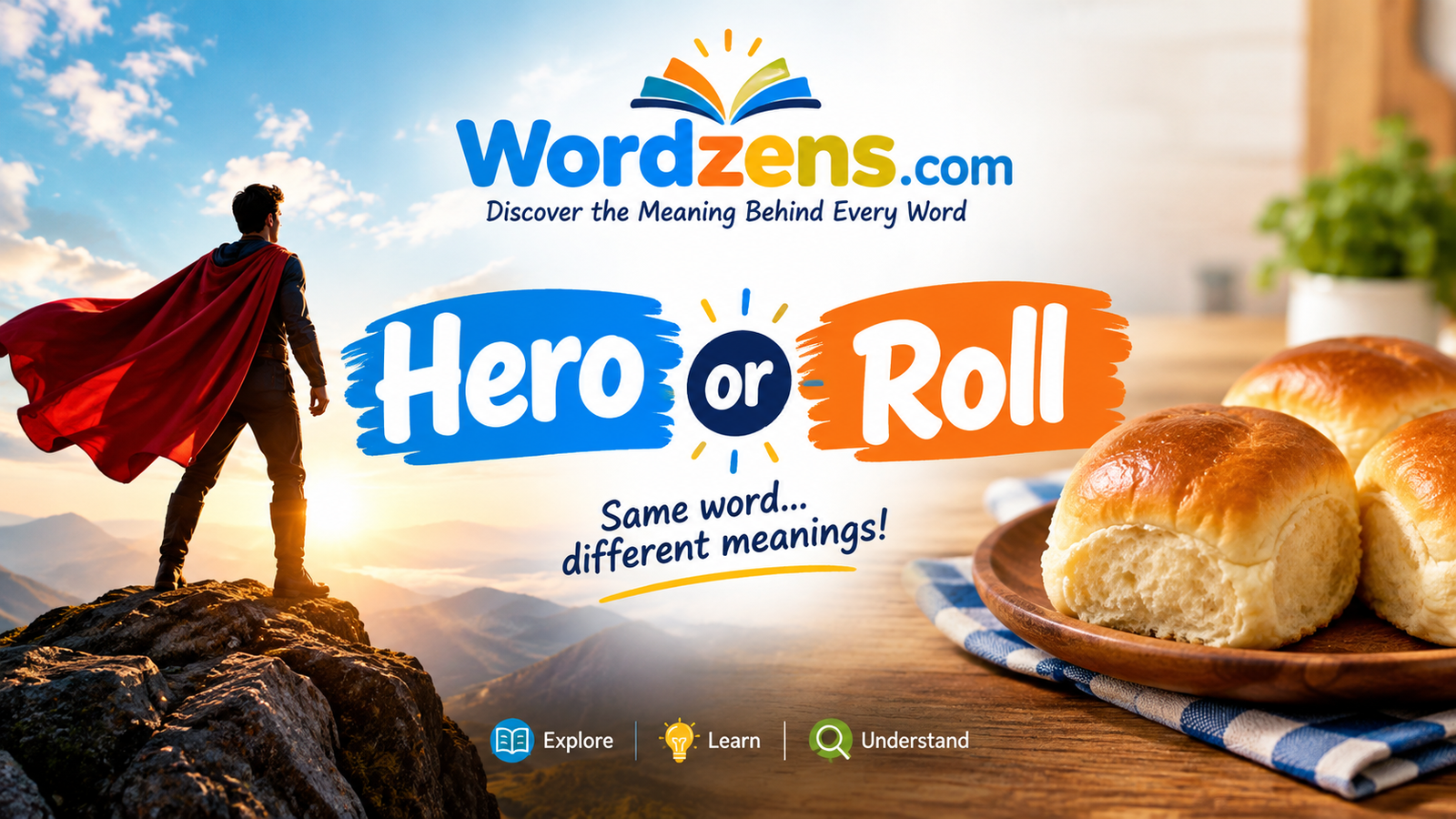
Ever stood in a sandwich shop and heard someone order a hero while another person asks for a roll? You’re not alone. These two words show up in kitchens bakeries and delis all over the world and people mix them up constantly.
Part of the confusion comes from the fact that a hero is often made using a roll. One is the finished sandwich. The other is the bread that holds it together. Because they’re so closely linked folks naturally start using the words like they mean the same thing.
Although they sound similar in casual conversation they serve completely different purposes. One describes a type of bread. The other describes an entire sandwich. Let’s clear up the confusion for good one bite at a time 🍞
What Is a Hero ?
A hero is a large sandwich typically built on a long piece of bread and stuffed with layers of meat cheese vegetables and condiments. Think Italian cold cuts provolone lettuce tomato onions and a drizzle of oil and vinegar all packed into one hearty meal.
How it’s used The word hero almost always refers to the complete sandwich not just the bread. When someone says I grabbed a hero for lunch they mean the whole stacked creation not a plain piece of bread.
Where it’s used The term is most common in and around New York City where delis proudly advertise heroes on their menus. Outside that region Americans might call the same sandwich a sub a hoagie in Philadelphia a grinder in New England or a po’boy in New Orleans though that one has its own distinct style.
Examples in sentences
- Can I get a turkey hero with extra pickles
- That deli on the corner makes the best Italian hero in the city
- We split a giant hero between the three of us
A short history note No one fully agrees where the word hero came from. One popular theory says a food writer in the 1930s called the sandwich so big that only a hero could finish it. Another theory suggests it’s a mispronunciation of the Greek word gyro. Either way the name stuck and today the hero is a proud symbol of New York deli culture.
What Is a Roll ?
A roll is a small individually shaped piece of bread usually round or oblong baked to be eaten on its own or used as the base for a sandwich burger or slider. Unlike a full loaf a roll is portioned for a single serving.
How it’s used Roll refers strictly to the bread itself. It’s an ingredient not a finished dish. You can eat a roll plain with butter use it for a burger or slice it open to build any kind of sandwich including a hero.
Where it’s used The word roll is used almost everywhere in the English speaking world including the US and UK though the type of roll varies by region. In the UK a bread roll sometimes called a bap bun or cob depending on the area is an everyday staple for sandwiches. In the US roll often means dinner rolls kaiser rolls or sub rolls.
Examples in sentences
- Pass me a roll from the bread basket
- She made ham sandwiches using fresh kaiser rolls
- The bakery sells warm rolls every morning
A short history note Bread rolls have existed for centuries as a practical portable way to eat bread without slicing a whole loaf. The shape made them easy to bake in batches and hand out individually which is exactly why they became the foundation for so many sandwich styles including the hero all around the world.
Key Differences Between Hero and Roll
Here’s the simplest way to remember it. A roll is bread. A hero is a sandwich made with a roll or similar long bread plus fillings.
Quick bullet points
- A roll is a type of bread a hero is a complete sandwich
- You can eat a roll on its own a hero is meant to be loaded with fillings
- Roll is used worldwide hero is regional mostly tied to New York
- A roll is an ingredient a hero is a finished dish
- Other regions use different words for the same hero concept sub hoagie grinder po’boy but they all still start with a roll
| Feature | Hero | Roll |
|---|---|---|
| What it is | A complete filled sandwich | A single piece of bread |
| Main use | Eaten as a full meal | Used as a base or side |
| Region most common | New York and nearby areas | Used globally US UK etc |
| Contains fillings | Yes always | No unless turned into a sandwich |
| Can stand alone | Yes it’s a finished dish | Yes as plain bread |
| Other regional names | Sub hoagie grinder po’boy | Bap bun cob UK regional |
Real-Life Conversation Examples
Dialogue 1 Tom: I’m starving. Want to split a hero? Priya: Sure! Do they use a soft roll or a crusty one? Tom: Crusty always. That’s half the reason it’s so good.
🎯 Lesson: The roll is the bread the hero is the finished filled sandwich.
Dialogue 2 Grandma: Grab me a roll from the bag dear. Jake: You want it plain or should I make you a hero? Grandma: Just the roll for now I’ll add butter.
🎯 Lesson: A roll can be eaten on its own a hero always comes with fillings.
Dialogue 3 Waiter: Would you like a hero or just a side roll with your soup? Customer: Oh I thought they were the same thing! Waiter: Nope one’s a full sandwich the other’s just bread.
🎯 Lesson: Menus often list both separately because they’re not interchangeable.
Dialogue 4 Visitor from London: Back home we’d just call this a bread roll. New Yorker: Sure but once we load it up with meat and cheese it becomes a hero!
🎯 Lesson: Regional language changes the name but the basic bread underneath stays a roll.
Dialogue 5 Mom: Did you eat the leftover hero in the fridge? Son: No I only ate the plain roll next to it. Mom: Good save the hero for your dad.
🎯 Lesson: Even within one household the two words describe two very different foods.
When to Use Hero vs Roll
Practical usage rules
- Use roll when talking about the bread itself whether it’s plain buttered or about to be filled
- Use hero when talking about the finished sandwich especially one packed with deli meats and toppings
- If it’s something you can eat plain with no fillings it’s a roll
- If it’s stacked sliced and ready as a full meal it’s a hero
Simple memory trick Think of it this way. A roll rolls in as the base and a hero rises as the hero of the meal once it’s loaded up. No fillings no hero just a roll.
US vs UK writing tips
- In US writing especially content aimed at New York or East Coast readers hero is instantly recognizable. Elsewhere in the US mention sub or hoagie as alternatives so readers everywhere understand
- In UK writing hero is far less common. British readers are more familiar with bread roll bap or sandwich so if you use hero briefly explain that it’s the American term for a stuffed sandwich
Fun Facts or History
- New York delis sometimes host hero eating contests where competitors try to finish massive versions of the sandwich in record time a nod to the idea that finishing one truly takes a hero
- The humble roll has ancient roots. Early bakers shaped small portions of dough into individual rolls simply because they baked faster and more evenly than one giant loaf a practical trick still used in bakeries today
FAQs:
Q: Is a hero the same as a sub?
A: They’re very similar. Hero is the term used mainly in New York while sub is more common across the rest of the United States. Both describe a long sandwich packed with fillings.
Q: Can you eat a roll without turning it into a hero?
A: Absolutely. A roll is just bread so you can eat it plain buttered or paired with soup no fillings required.
Q: Does the type of roll matter when making a hero?
A: Yes. Most heroes use a long crusty roll because it holds up well to heavy fillings and juicy condiments without falling apart.
Q: Why do New Yorkers say hero instead of sub?
A: It’s mostly regional tradition. The term has been used in New York delis for decades and has simply stuck as part of the local food culture.
Q: Is roll used the same way in the US and UK?
A: Mostly yes though the UK has extra regional names like bap bun or cob for the same basic bread roll concept.
Conclusion
At the end of the day the mix up between hero and roll comes down to one simple idea bread versus a finished meal. A roll is the bread small portable and ready to be eaten plain or turned into something bigger. A hero takes that roll and transforms it into a complete hearty sandwich loaded with meats cheese and veggies.
They’re connected but they’re not the same thing. Once you remember that a roll is the vessel and a hero is the destination you’ll never confuse them again. Next time someone uses these two words you’ll know exactly what they mean!

I’m Peter Jones, the founder of Wordzens.com. I’m passionate about creating clear language guides, word meanings, grammar resources, and educational content that helps readers expand their vocabulary, improve their communication, and learn with confidence. My goal is to publish high-quality, easy-to-understand content that makes learning words and language skills simple, useful, and enjoyable for readers of all levels.