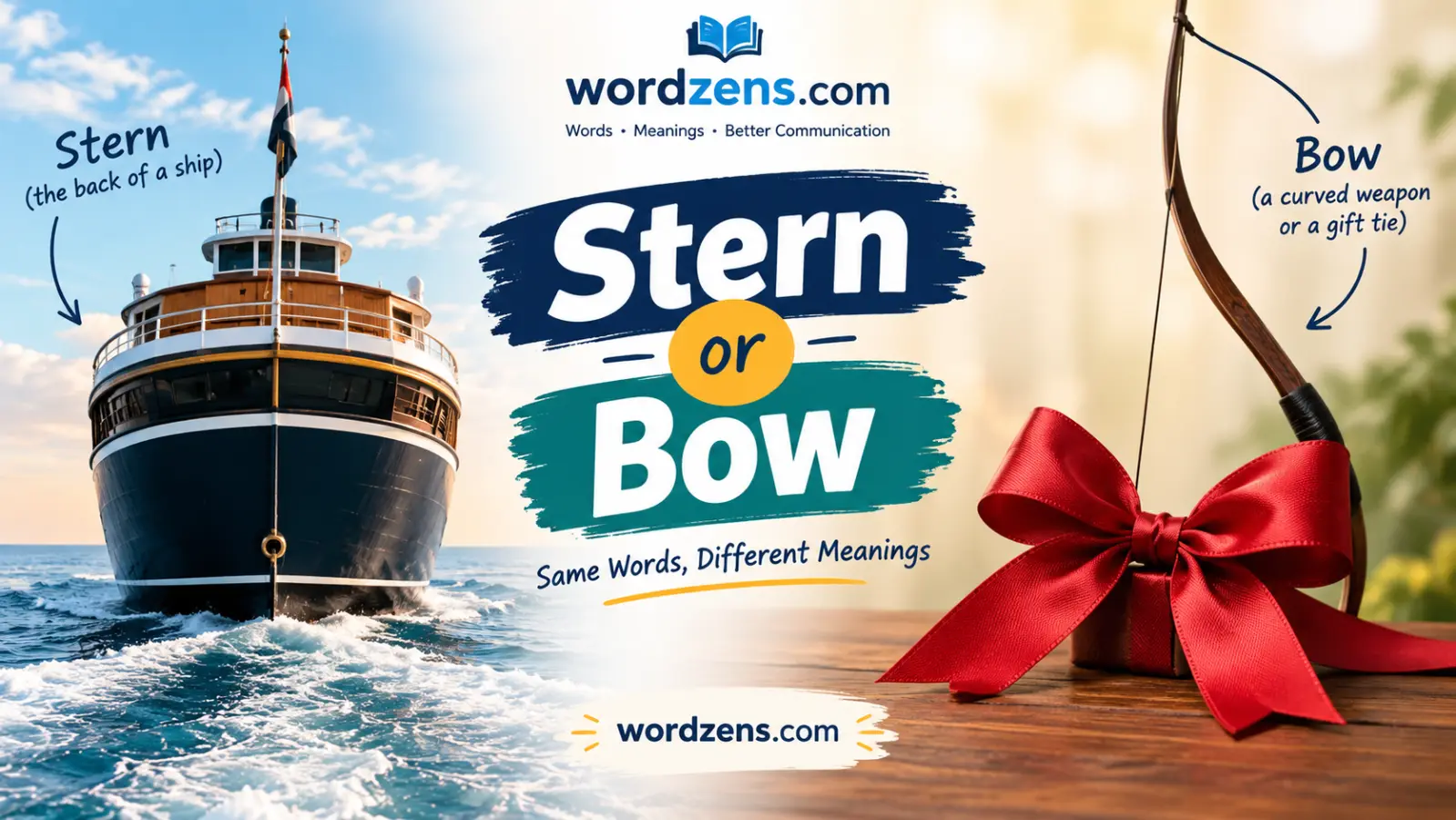
Understanding the difference between stern or bow is one of the common questions related to this topic. These terms are used in nautical practice in order to describe two opposite sides of a vessel, and they both refer to a certain direction.
The bow is the front of the boat or ship while the stern is located at the backside, but how to use these terms in a boat or ship.
Actually, it is not difficult to reply to this question, and in this article, we will provide an answer.
We will also discuss some other related terms and give examples from different boats to illustrate the difference between stern and bow. All you need is shown below.
What Is “Stern”?
The stern is a word that describes the backward part of a boat or a ship. When a person is on the stern they face the direction from where their vessel is heading. The stern is the back of the boat. It is where the boat ends.
People often stand at the stern when they want to look behind. It is also where the engine or motor is usually placed. The stern helps the boat move through water. It keeps the boat balanced. A boat can turn easily when the stern is handled properly.
The stern is important for steering. The stern is also known as the part of a boat. People sometimes call it the back of the boat. The stern is not a name. It is a part of the boat. It helps the boat go forward. It helps the boat stay in control.
The stern plays a role in how a boat moves. The stern is used in different kinds of boats. The stern is used in boats. The stern is used in ships. The stern is used in sailboats. The stern is used in motorboats. The stern works in all kinds of water. The stern works in rivers. The stern works in lakes. The stern works in oceans. The stern is always, at the back. The stern is always important. Essentially it is the rear end of any water vehicle.
How it is used:
The word stern is used when sailors, as well as other ship crew members, give directions or talk about different parts of the vessel.
They might say something like “the anchor is at the stern” or “go towards the stern to get your life jackets.” It can also be used as a compass direction, with something being aft of the stern or towards the stern of the ship.
Where it is used:
The nautical term is used worldwide among English-speaking countries. The people of the United States, the United Kingdom, Australia, and many other countries use the word. It is used by sailors, marine officers, and other people who have received proper training in a ship or boat handling facility.
Examples in sentences:
- The fishermen cast their nets from the stern of the boat.
- Waves crashed against the stern and rocked the vessel gently.
- She waved goodbye from the stern as the ship pulled away from the dock.
Historical note: The word stern comes from Old Norse stjórn meaning steering since older ships were steered from the rear using a rudder or steering oar. That is why the stern has always been closely linked to control and navigation. It is literally where the steering happened.
What Is “Bow”?
The bow pronounced like cow not like the bow you tie on a gift refers to the front most part of a boat or ship. It is the part that cuts through the water first as the vessel moves forward.
How it’s used: The bow gets mentioned constantly in navigation safety instructions and everyday boating conversation. You will hear things like the bow is taking on water or stand clear of the bow while docking. It is also used to describe direction such as off the bow meaning something is straight ahead of the vessel.
Where it’s used: Just like stern the bow is a globally recognized nautical term. Whether you are on a sailboat in Maine a fishing trawler in Scotland or a yacht in Sydney Harbour the word bow means exactly the same thing. It is also commonly used in military and naval contexts especially in phrases like bow of the ship during combat or rescue operations.
Spelling and usage differences: Unlike some nautical terms that change between American and British English bow stays consistent. Context still matters though. Bow as in the front of a ship is pronounced differently than bow as in bending forward or a decorative ribbon knot which can trip up non native English speakers.
Examples in sentences:
- The bow sliced through the choppy waves with ease.
- He stood at the bow and scanned the horizon for land.
- The captain warned everyone to stay away from the bow during the storm.
Regional note: In the UK sailors sometimes use prow as a poetic alternative to bow especially in literature and older texts but bow remains the standard everyday term across all English speaking maritime cultures.
Key Differences Between Stern and Bow
Here is a quick breakdown of how these two nautical terms differ:
- Position: The bow sits at the front of the vessel. The stern sits at the back.
- Direction of travel: The bow leads the way forward. The stern trails behind.
- Steering connection: The stern historically housed the rudder and steering mechanism.
- Water impact: The bow cuts through waves first. The stern deals with the wake left behind.
- Common phrases: Bow wave refers to water pushed forward by the front of the ship. Stern wake refers to the water disturbance trailing behind.
- Pronunciation: Bow rhymes with cow. Stern rhymes with burn.
Comparison Table
| Feature | Stern | Bow |
|---|---|---|
| Location on vessel | Rear/back | Front |
| Faces direction of travel | No (faces backward) | Yes (faces forward) |
| Historical function | Steering and rudder control | Cutting through water |
| Common phrase | “Stern wake” | “Bow wave” |
| Pronunciation | Rhymes with “burn” | Rhymes with “cow” |
| Used in navigation as | Reference point behind the ship | Reference point ahead of the ship |
| Typical crew activity | Fishing anchoring life jacket storage | Lookout duty docking wave breaking |
Real Life Conversation Examples
Dialogue 1: On a Fishing Trip
Mike: Toss the cooler up front! Sarah: You mean the bow? Mike: Yeah the bow sorry. I always forget which is which.
🎯 Lesson: The bow is the front of the boat so up front always means the bow.
Dialogue 2: Docking a Boat
Captain: Tie the rope at the stern first. Deckhand: The back one? Captain: Exactly the stern is the back.
🎯 Lesson: The stern is the rear of the boat so back facing ropes and lines attach there.
Dialogue 3: On a Cruise Ship
Tourist: Our cabin has a bow view. Is that good? Crew Member: It’s great! You’ll see the ocean ahead as we sail.
🎯 Lesson: A bow view cabin faces forward and gives guests a direct view of where the ship is heading.
Dialogue 4: Learning to Sail
Instructor: Always check the stern before reversing. Student: Why the stern and not the bow? Instructor: Because that’s the direction you’re moving when you back up.
🎯 Lesson: When reversing the stern becomes your leading edge so it needs extra attention.
Dialogue 5: Casual Beach Chat
Friend 1: Did you see that yacht’s bow wave? It was huge! Friend 2: I thought you meant the back of the boat. Friend 1: Nope that’s the stern. Totally different thing.
🎯 Lesson: A bow wave forms at the front of a moving vessel not the back.
When to Use Stern vs Bow
Knowing when to use each word comes down to a simple rule. Direction and position. If you are talking about the front of a boat ship or any watercraft use bow. If you are referring to the back use stern.
Simple memory tricks:
- Bow means Boat’s Own Way forward. It leads the vessel.
- Stern think of a stern serious looking captain standing at the back keeping watch and steering.
- Bow rhymes with cow and cows walk forward. That helps you remember it means the front.
- Stern rhymes with burn and engines and rudders which historically sat at the back work hard steering the ship.
US vs UK usage: Both American and British English use stern and bow identically in nautical contexts. There is no regional variation in meaning though British literature occasionally uses prow as a stylistic substitute for bow. For SEO and general writing purposes stick with bow and stern since they are the most searched and universally understood terms.
Fun Facts or History Section
- The phrase starboard also comes from steering history. Before rudders were centered at the stern ships used a steering oar on the right side. That is why starboard the right side and stern share a linguistic connection to old steering practices.
- The bow is considered the lucky part of a ship in many maritime traditions. Sailors have historically painted eyes on the bow of fishing boats believing it helps the vessel see its way safely through dangerous waters. This tradition is still practiced in parts of the Mediterranean and Asia today.
FAQs:
1. What is the easiest way to remember the difference between stern and bow?
Just remember that the bow leads the way forward like a cow walking ahead while the stern sits at the back historically linked to steering and control.
2. Is the bow always the front of every boat?
Yes. On virtually every type of watercraft from canoes to cargo ships the bow is universally the front most point.
3. Why is the back of a ship called the stern instead of just back?
The word stern comes from Old Norse referring to steering since older vessels were controlled from the rear using a rudder or steering oar.
4. Do stern and bow mean different things in American vs British English?
No. Both stern and bow are used identically in American and British nautical English. The only stylistic difference is that British literature sometimes uses prow instead of bow.
5. What is a bow wave?
A bow wave is the wave created at the front of a moving vessel as it pushes through the water and it is distinct from the wake left behind at the stern.
6. Can stern and bow be used for non boat vehicles too?
No these terms are strictly nautical. They apply only to boats ships and other watercraft not cars planes or other vehicles.
7. How do I pronounce bow correctly in this context?
When referring to the front of a ship bow rhymes with cow not with the bow used for tying ribbons or bending forward.
Conclusion:
Time you are near the water you will understand what people mean when they talk about the bow or the stern. The bow is the part of the boat. It moves through the water. Pushes the waves aside. It leads the way forward.
The stern is the part of the boat. It stays behind. Has been linked to steering and control since the old days. Even though the words bow and stern sound similar they point to ends of a boat or ship.
Whether you are talking to sailors who are reading a story or you are getting ready, for your first boat ride knowing this difference will make you sound like someone who understands water. So the time someone says the words bow and stern you will know exactly what they mean.

I’m Peter Jones, the founder of Wordzens.com. I’m passionate about creating clear language guides, word meanings, grammar resources, and educational content that helps readers expand their vocabulary, improve their communication, and learn with confidence. My goal is to publish high-quality, easy-to-understand content that makes learning words and language skills simple, useful, and enjoyable for readers of all levels.