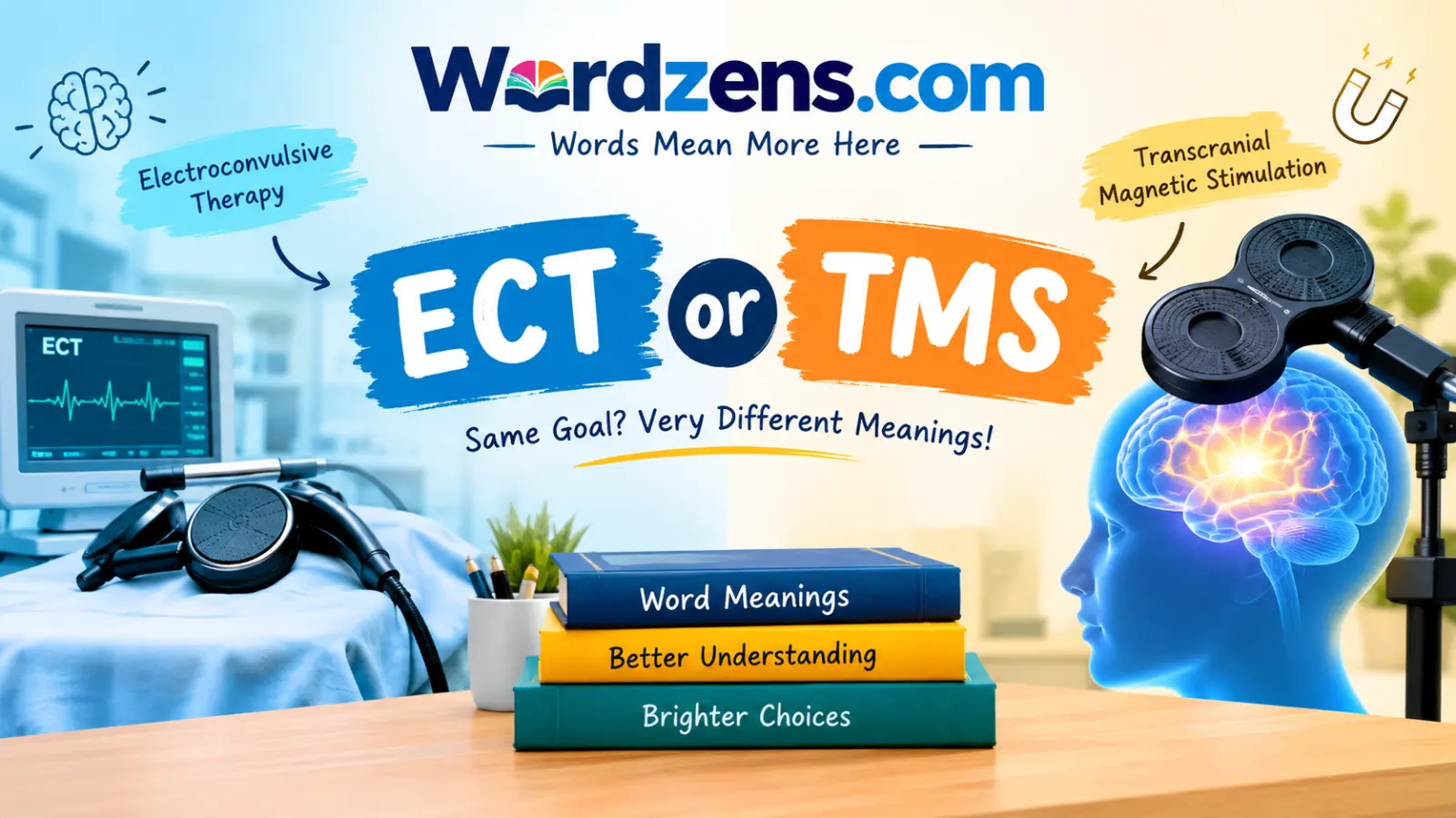
If you’ve spent any time researching depression treatment options you’ve probably run into two acronyms that keep popping up together ECT and TMS. They’re often mentioned in the same breath sometimes even mixed up in casual conversation. That mix up is more common than you’d think.
Part of the confusion comes from the fact that both are brain based treatments. Both are offered by psychiatrists. Both usually come up when medication and therapy haven’t worked as well as hoped. People hear “electrical” or “magnetic” and assume it’s basically the same procedure with a different name. Although they look/sound similar they serve completely different purposes.
In this guide we’ll break down what ECT is what TMS is and how they differ in procedure intensity and results. We’ll also cover how to know which one might come up in a conversation with your doctor. No jargon no confusion just a clear simple explanation.
What Is ECT?
ECT stands for Electroconvulsive Therapy. It’s a medical procedure where a small carefully controlled electric current passes through the brain while the patient is under general anesthesia. This brief electrical stimulation triggers a short seizure which researchers believe helps reset certain brain chemicals and neural circuits linked to severe depression.
ECT is typically used for the toughest cases. Think severe depression treatment resistant depression or conditions like catatonia and certain forms of bipolar disorder that haven’t responded to medication or talk therapy. It’s also sometimes used when a patient needs rapid relief such as someone at high risk of self harm who can’t wait weeks for antidepressants to kick in.
How it’s used: Sessions happen in a hospital or clinical setting usually two to three times a week for several weeks. Because general anesthesia is involved the patient is asleep and feels nothing during the procedure itself.
Example sentences:
- Her doctor recommended ECT after three different antidepressants failed to help.
- Many patients are surprised how quickly ECT can lift severe depressive symptoms.
A bit of history: ECT has been used since the late 1930s. Early versions were harsh and poorly regulated which is why the treatment carries some outdated stigma today. Modern ECT is closely monitored uses precise dosing and is considered one of the most effective treatments for severe depression when other options have failed.
What Is TMS?
TMS stands for Transcranial Magnetic Stimulation. Unlike ECT it doesn’t involve anesthesia seizures or electrical currents running through the whole brain. Instead a magnetic coil rests against the scalp and delivers targeted magnetic pulses to a specific brain region usually the prefrontal cortex an area linked to mood regulation.
TMS is generally used for moderate to treatment resistant depression in patients who are fully conscious and able to go about their day right after treatment. It’s a gentler more targeted option compared to ECT and it doesn’t require hospitalization.
How it’s used: A typical TMS session lasts around 20 to 40 minutes. Patients usually come in five days a week for four to six weeks. There’s no downtime. You can drive yourself home and return to work the same day.
Example sentences:
- He chose TMS because he wanted a treatment that didn’t require time off work.
- TMS sessions felt more like a routine doctor’s visit than a major medical procedure.
Regional note: TMS was cleared by the FDA for treatment resistant depression in 2008 and has since expanded to treat OCD and other conditions in various countries. It’s widely available in outpatient clinics across the US UK Canada and Australia.
Key Differences Between ECT and TMS
Here’s where things become clear. While both ECT and TMS target the brain to treat depression the similarities pretty much stop there.
- Anesthesia: ECT requires general anesthesia. TMS requires none.
- Mechanism: ECT induces a controlled seizure. TMS uses magnetic pulses without causing a seizure.
- Setting: ECT happens in a hospital or specialized clinical setting. TMS happens in an outpatient office.
- Recovery time: ECT patients often need rest and a ride home. TMS patients resume normal activities right away.
- Typical candidates: ECT is usually reserved for severe urgent or treatment resistant cases. TMS suits moderate to treatment resistant cases without immediate crisis.
- Side effects: ECT can cause temporary memory issues and confusion. TMS side effects are usually mild like scalp discomfort or headache.
- Speed of results: ECT tends to work faster sometimes within days. TMS usually takes a few weeks of consistent sessions.
Comparison Table
| Feature | ECT (Electroconvulsive Therapy) | TMS (Transcranial Magnetic Stimulation) |
|---|---|---|
| Full Name | Electroconvulsive Therapy | Transcranial Magnetic Stimulation |
| Anesthesia Required | Yes general anesthesia | No |
| Mechanism | Controlled electrical current plus induced seizure | Targeted magnetic pulses |
| Session Length | 5 to 10 minutes plus recovery time | 20 to 40 minutes |
| Frequency | 2 to 3 times per week | 5 times per week |
| Treatment Duration | 2 to 4 weeks (6 to 12 sessions) | 4 to 6 weeks (20 to 30 sessions) |
| Setting | Hospital or specialized clinic | Outpatient clinic |
| Can Drive Home Same Day | No | Yes |
| Common Side Effects | Memory issues confusion headache | Mild headache scalp discomfort |
| Best For | Severe or urgent treatment resistant depression | Moderate to treatment resistant depression |
| Speed of Results | Often faster | Gradual over weeks |
Real Life Conversation Examples
Dialogue 1 Maria: My psychiatrist mentioned ECT but isn’t that the one with the magnets? Jordan: No that’s TMS. ECT is the one that uses electrical currents and puts you under anesthesia. Maria: Oh wow totally different than I thought.
🎯 Lesson: ECT involves anesthesia and electrical currents while TMS uses magnetic pulses with no anesthesia.
Dialogue 2 Sam: I heard TMS knocks you out for the treatment. Priya: Nope you’re fully awake. You could scroll your phone during the session if you wanted. Sam: That’s way less scary than I imagined.
🎯 Lesson: TMS is done while the patient stays fully conscious with no anesthesia needed.
Dialogue 3 Ben: Isn’t ECT kind of outdated? Like something from old movies? Aisha: That’s the stigma talking. Modern ECT is safe monitored and really effective for severe depression.
🎯 Lesson: ECT has evolved a lot since its early history and is now a well regulated effective treatment.
Dialogue 4 Noah: How long does a TMS treatment plan usually take? Layla: Around four to six weeks five days a week. It’s a bigger time commitment but there’s zero downtime after each session.
🎯 Lesson: TMS needs a longer overall commitment but doesn’t interrupt daily life.
Dialogue 5 Grace: My uncle did ECT and said his memory was fuzzy for a bit afterward. Tom: Yeah that’s a known side effect. TMS doesn’t usually cause that kind of memory fog.
🎯 Lesson: Memory related side effects tie more closely to ECT than to TMS.
When to Use ECT vs TMS
Here’s a simple way to think about it.
If someone needs fast powerful relief for severe or life threatening depression ECT is often the recommended path especially in emergency or inpatient settings.
If someone has treatment resistant depression but is stable enough for daily outpatient sessions TMS is usually the gentler first step before considering ECT.
Memory trick: Think “Electro equals Emergency level stronger treatment” and “TMS equals Targeted gentler outpatient treatment.”
US vs UK note: In the US both ECT and TMS are FDA regulated and widely available. In the UK ECT is regulated by the NHS and generally reserved for severe cases while TMS availability through the NHS stays more limited with many patients accessing it through private clinics.
Ultimately the decision between ECT and TMS isn’t something to figure out alone. It’s a conversation to have with a licensed psychiatrist who can weigh the severity of symptoms medical history and personal circumstances.
Fun Facts or History Section
- ECT’s origins trace back to 1938 in Italy making it one of the oldest continuously used psychiatric treatments still practiced today just in a far safer modernized form.
- TMS grew out of magnetic stimulation research from the 1980s and didn’t receive FDA clearance for depression until 2008 making it a relatively young treatment compared to ECT.
FAQs:
Q: Is TMS as effective as ECT?
A: TMS helps many people with treatment resistant depression but ECT generally shows a higher success rate for the most severe cases.
Q: Does ECT cause permanent memory loss?
A: Most memory effects from ECT are short term and improve within weeks though some patients report longer lasting changes. This varies by individual.
Q: Is TMS painful?
A: Most people describe TMS as a tapping or knocking sensation on the scalp rather than pain.
Q: Can insurance cover ECT or TMS?
A: Many insurance plans cover both treatments for documented treatment resistant depression but coverage varies by provider and location.
Q: Which one works faster ECT or TMS?
A: ECT typically shows results faster sometimes within one to two weeks while TMS usually takes several weeks of consistent sessions.
Conclusion:
At the end of the day ECT and TMS may both fall under the umbrella of brain stimulation therapies but they’re built for different situations different intensities and different patient needs.
ECT brings powerful fast acting relief for the most severe cases using anesthesia and controlled electrical stimulation.
TMS offers a gentler outpatient friendly option using magnetic pulses ideal for those who need something less intensive but still effective.
Understanding these differences can make conversations with doctors friends or family members so much easier. Next time someone uses these two words you’ll know exactly what they mean!

I’m Peter Jones, the founder of Wordzens.com. I’m passionate about creating clear language guides, word meanings, grammar resources, and educational content that helps readers expand their vocabulary, improve their communication, and learn with confidence. My goal is to publish high-quality, easy-to-understand content that makes learning words and language skills simple, useful, and enjoyable for readers of all levels.