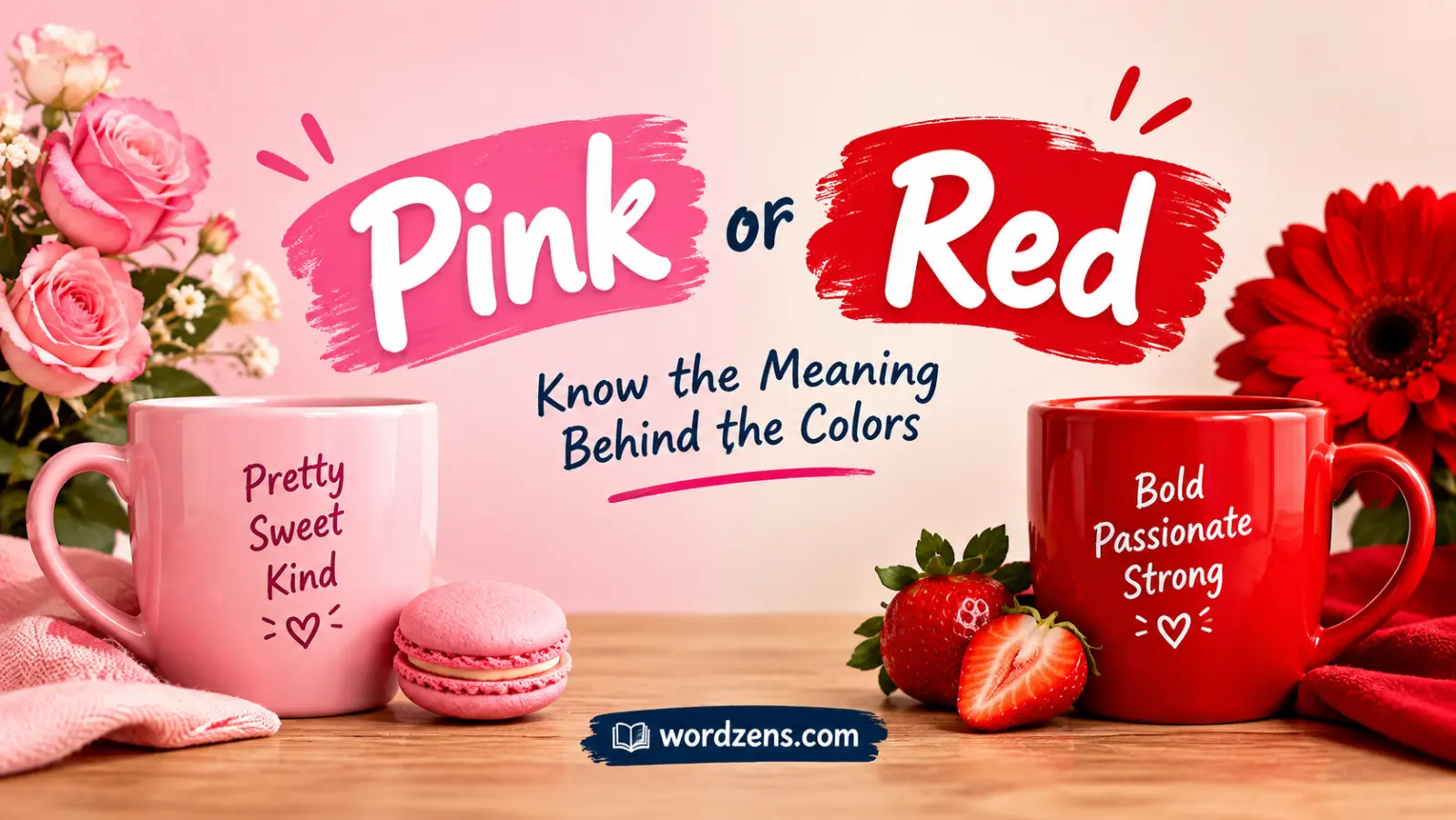
Ever stood in front of a paint chart or a flower shop and wondered if that shade is pink or red? You’re not alone. People face this question every day. Maybe they’re picking a wedding color. Maybe they’re buying a birthday card. Maybe they’re just describing a sunset to a friend.
The confusion makes sense. Pink and red sit close together on the color wheel. Pink is really just a lighter softer version of red. That closeness causes mix ups especially under dim lighting or on a badly calibrated screen.
Although they look similar they serve completely different purposes. Red feels bold and urgent. Pink feels soft and warm. By the end of this article you won’t mix them up again.
What Is “Red”?
Red is one of the three primary colors. The others are blue and yellow. Red sits at one end of the visible light spectrum. It has the longest wavelength humans can see. In simple terms red is pure and intense. No white added. No dilution. Just bold pigment.
How It’s Used
Red is the color of urgency passion danger and power. This isn’t random. Red is often the first color babies learn to spot. It triggers faster reactions than almost any other hue. That’s why:
- Stop signs and stop lights are red
- Sale tags and urgent buttons are often red
- Fire trucks and warning labels use red
Where It’s Used
Red is spelled the same way in American and British English. No regional difference here. Red works as a noun (“She wore red”) and as an adjective (“a red dress”). It shows up in idioms too. Seeing red. Red flag. Red handed. In the red.
Examples in Sentences
- The red car pulled up outside the office.
- He turned red with embarrassment during the meeting.
- Their financial report showed the company was deep in the red.
A Short Historical Note
Red pigment is one of the oldest colors humans ever used. Cave paintings from over 40000 years ago used red ochre. Ancient Rome linked red to power and war. That’s part of why red still feels commanding today.
What Is “Pink”?
Pink is a lighter shade of red. It forms when you mix red with white. Pink isn’t a primary color. It’s a tint. That one fact is the root of the whole pink or red confusion.
How It’s Used
Pink carries a different emotional weight than red. Where red feels intense pink feels gentle playful and romantic. Think of:
- Baby shower decorations for girls (a modern Western trend not a universal rule)
- Valentine’s Day cards and soft romantic gestures
- Cherry blossoms flamingos and cotton candy
Where It’s Used
Pink is also spelled the same way in American and British English. It works as a noun (“I love pink”) and as an adjective (“a pink shirt”). Interestingly pink didn’t get its own name in English until the late 1600s. Before that people just called it light red.
Examples in Sentences
- She painted her bedroom walls a soft pink.
- The bouquet was full of pink roses and baby’s breath.
- His cheeks turned pink from the cold wind.
A Short Usage Note
Pink wasn’t always tied to femininity. Up until the early 1900s pink was seen as a strong color for boys. Blue was considered delicate and fit for girls. The switch happened slowly through 1940s marketing. Most people don’t know this fun fact.
Key Differences Between Pink and Red
Pink and red are related but they are not interchangeable. Mixing them up in a design brief or a fashion order can genuinely change the meaning.
Quick breakdown:
- Red is a primary color. Pink is a tint made from red and white.
- Red symbolizes passion danger and urgency. Pink symbolizes softness love and calm.
- Red is bold and saturated. Pink is pale and diluted.
- Red has existed as a named color for tens of thousands of years. Pink got its name only a few centuries ago.
- Red is used for warnings and alerts. Pink is used for comfort and gentleness.
| Feature | Red | Pink |
|---|---|---|
| Type of color | Primary color | Tint (red + white) |
| Emotional tone | Intense urgent powerful | Soft calm romantic |
| Common uses | Warnings stop signs sales | Romance baby items florals |
| Origin of name | Ancient (40000+ years) | Coined in the 1600s |
| Cultural association | Power danger love (in some cultures) | Femininity (modern trend) gentleness |
| Saturation level | High | Low |
Real Life Conversation Examples
Dialogue 1 Amy: Can you grab the red folder from my desk? Sam: This pink one? Amy: No that’s pink. I need the actual red one next to it.
🎯 Lesson: A small shade difference can cause a mix up when you’re not looking closely.
Dialogue 2 Jake: I’m painting the nursery pink. Mia: Bright red pink or a really pale pink? Jake: Pale. Bright red would feel too intense for a baby’s room.
🎯 Lesson: Tone and intensity matter. The word pink alone doesn’t tell you how strong the color is.
Dialogue 3 Server: Would you like the red velvet cake or the pink macaron? Guest: Is red velvet actually red or more of a dark pink? Server: Definitely red. Just a deep rich shade of it.
🎯 Lesson: Some shades sit close to the border and that’s exactly why confusion happens with food too.
Dialogue 4 Tom: Your face is so red right now! Lily: It’s just pink from blushing not red like a sunburn!
🎯 Lesson: People often use the word red loosely to describe anything from light pink to deep crimson.
Dialogue 5 Designer: The client wants a bold red logo. Assistant: I sent them a pink mockup by mistake. Designer: That’s a totally different brand feeling. We need to fix that today.
🎯 Lesson: In branding choosing pink instead of red can completely shift how a company feels to customers.
When to Use Red vs Pink
Choosing between pink and red comes down to the feeling you want and the exact shade you mean.
Practical rules:
- Use red to grab attention signal urgency or express intensity (sales warnings bold outfits)
- Use pink for a gentle romantic or playful tone (weddings nurseries spring outfits)
- If the color is pale it’s almost always pink
- If the color is deep and saturated call it red
Simple memory trick: Think of pink as red that got shy. Red is loud and confident. Pink is red’s quieter cousin.
US vs UK usage: No spelling or grammar difference exists between American and British English for either word. Both regions use pink and red the same way. No adjustments needed based on your audience’s location.
Fun Facts or History
- Pink didn’t get linked to girls until targeted marketing pushed that idea in the mid 1900s. Before that pink was often seen as a bold color for boys.
- In many cultures red means luck and celebration especially in Chinese culture. Pink is a much newer cultural symbol tied mostly to Western romance and softness.
FAQs:
Is pink a shade of red?
Yes. Pink forms when you mix red with white. That makes it a lighter tint of red rather than its own primary color.
Why do people confuse pink and red?
They sit close together on the color spectrum. Lighting screens or faded fabric can make deep pink look red and light red look pink.
Is there a difference between pink and red in different languages?
Some languages historically used one word for both shades before pink got its own name. That history still shapes how some non native English speakers use the terms today.
Which color is considered more powerful pink or red?
Red is generally seen as more intense powerful and attention grabbing. Pink is viewed as calmer and gentler.
Conclusion:
Pink and red share the same color family but they carry very different meanings and moods. Red is bold urgent and full of intensity. It’s the color of stop signs passion and power. Pink is its softer sibling built for warmth romance and gentle emotion.
Once you know pink is simply a diluted version of red the confusion disappears for good. Whether you’re designing a logo decorating a nursery or describing a sunset knowing the real difference helps you say exactly what you mean. Next time someone uses these two words you’ll know exactly what they mean!

I’m Peter Jones, the founder of Wordzens.com. I’m passionate about creating clear language guides, word meanings, grammar resources, and educational content that helps readers expand their vocabulary, improve their communication, and learn with confidence. My goal is to publish high-quality, easy-to-understand content that makes learning words and language skills simple, useful, and enjoyable for readers of all levels.