
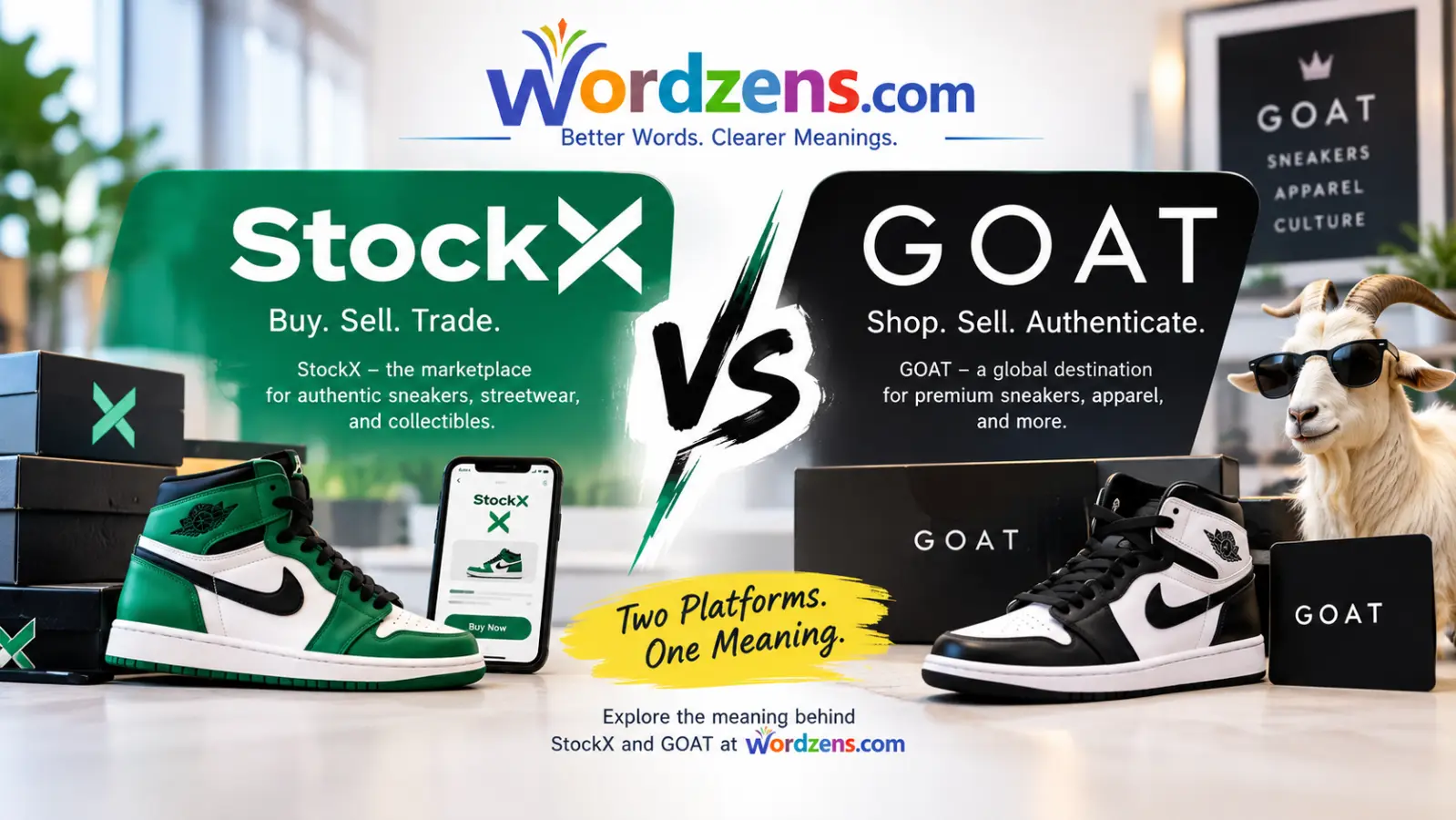
Ever dropped a fresh pair of Jordans into your cart and then froze at checkout wondering if you picked the wrong app? You are not alone. StockX and GOAT get mixed up all the time. Both promise authenticated sneakers. Both look sleek on your phone. Both have loyal fans who argue about which one is better. New buyers often assume they are basically the same thing.
Although they look and sound similar in purpose they serve completely different purposes under the hood. One runs on live bidding. The other runs on fixed prices and used gear. This guide breaks down exactly what separates StockX from GOAT so you never overpay or list your sneakers on the wrong platform.
What Is StockX?
StockX is a stock market style resale platform for sneakers streetwear electronics and collectibles. Instead of fixed prices it runs on a live bid and ask system. Buyers place bids. Sellers set asking prices. A sale happens the moment those numbers match. Think of it like a stock exchange but for Yeezys.
How it’s used: Shoppers browse a product page and see the current lowest ask and highest bid along with a price history chart. They can buy instantly at the lowest ask or place their own bid and wait. Sellers work the same way by accepting a bid or setting a new ask.
Where it’s used: StockX runs globally with strong user bases in the United States United Kingdom Canada and Europe. It operates several authentication centers worldwide so shipping and fees can shift a bit by region.
Example sentences:
- “I placed a bid on StockX for $180 and hoped the seller would accept.”
- “Check the StockX price chart before buying. It shows how the value moved over the past year.”
Quick history note: StockX launched in 2015 in Detroit founded by Josh Luber and Dan Gilbert. The idea was simple. Bring transparent market driven pricing to a space that used to run on forums and guesswork.
What Is GOAT?
GOAT stands for Greatest Of All Time. It is a fixed price catalog marketplace for sneakers apparel and accessories. It sells both new deadstock items and used pairs. Most listings have a set price you can buy right away though some allow offers.
How it’s used: You browse the catalog and pick a listing whether new or used. Used pairs come with condition photos. You check out like a normal online store. Sellers upload their item and GOAT may ask for extra photos to grade the sneaker before authentication.
Where it’s used: GOAT is especially strong in the United States but ships to well over 100 countries. It is also the parent brand behind Grailed the menswear resale site.
Spelling note: There is no tricky spelling here. The confusion is about function not letters. People sometimes say “I’ll just GOAT it” the way they’d say “Google it” even when they mean StockX.
Example sentences:
- “This pair was missing the box so I listed it on GOAT instead.”
- “I found the same Dunks cheaper on GOAT since they had a used option.”
Quick history note: GOAT launched in 2015 as a sneaker only app built to fight counterfeits. It grew into a full lifestyle marketplace after merging with rival platform Flight Club in 2018.
Key Differences Between StockX and GOAT
Quick bullet points:
- Pricing model: StockX uses live bidding. GOAT uses mostly fixed prices.
- Condition: StockX focuses on new unworn deadstock. GOAT welcomes used and pre owned pairs with grading.
- Fees: StockX charges around 9 to 13 percent transaction fee plus a 3 percent processing fee that drops as sellers level up. GOAT charges a commission starting near 9.5 percent that varies by rating and location.
- Shipping: StockX ships from centralized authentication hubs. GOAT can take a bit longer since used items need extra inspection.
- Selection: GOAT carries more luxury streetwear and used inventory. StockX leans toward new hyped releases and collectibles.
- Refunds: StockX often gives cash based refunds. GOAT has leaned more on store credit in some cases.
Comparison Table
| Feature | StockX | GOAT |
|---|---|---|
| Pricing model | Live bid and ask market | Fixed price with occasional offers |
| Best for | New deadstock sneakers | New and used sneakers |
| Starting seller fee | About 10% plus 3% processing | About 9.5% commission based on rating |
| Condition options | Mostly new and unworn | New used and graded |
| Authentication | Centralized authentication centers | In house and third party authentication |
| Refund style | Usually cash based | Often store credit |
| Global reach | Strong in US UK EU and Canada | Ships to 100+ countries |
| Founded | 2015 in Detroit | 2015 merged with Flight Club in 2018 |
Real Life Conversation Examples
Dialogue 1
Maya: I want to sell my old Dunks but they have some scuffs. Jordan: Don’t put those on StockX. They’re picky about deadstock. Try GOAT. They have a used category. Maya: Oh nice I didn’t know that.
🎯 Lesson: GOAT is the better home for used or worn sneakers while StockX mainly handles new unworn pairs.
Dialogue 2
Sam: Why is this shoe $20 cheaper on one app than the other? Priya: StockX runs on bidding so prices move constantly. GOAT’s price is usually fixed. Sam: So I could snipe a lower price if I wait on StockX? Priya: Exactly. Patience pays off there.
🎯 Lesson: StockX prices shift with live bids while GOAT prices generally stay steady.
Dialogue 3
Alex: My order got refunded but I only got store credit instead of cash. Ravi: Yeah that happens more on GOAT. StockX usually refunds your original payment method. Alex: Wish I knew that before I bought.
🎯 Lesson: Check the refund policy before buying since StockX and GOAT don’t always refund the same way.
Dialogue 4
Chloe: I keep calling every sneaker app GOAT even when I mean StockX. Devon: Ha everyone does that. They’re totally different platforms though. Chloe: I guess it’s like calling every tissue a Kleenex.
🎯 Lesson: People often use GOAT as a generic nickname for sneaker apps but StockX and GOAT run on different systems.
Dialogue 5
Liam: I want the fastest delivery possible for these limited Jordans. Noor: Then StockX might be quicker since it ships straight from an authentication hub. Liam: Good call. I don’t want to wait around.
🎯 Lesson: StockX’s centralized authentication process can sometimes mean faster turnaround for new releases.
When to Use StockX vs GOAT
Practical rules:
- Use StockX when you want brand new unworn sneakers or collectibles and enjoy watching live market pricing.
- Use GOAT when you’re buying or selling used pre loved or luxury pieces that need a condition grade.
- Use StockX if you value predictable cash refunds and a simple process for hyped drops.
- Use GOAT if you want a wider catalog that includes streetwear apparel and Grailed adjacent menswear.
Simple memory trick: Think StockX equals stock market. Live bidding new items only. Think GOAT equals grab older and trade ins. Used sneakers welcome.
US vs UK note: Both platforms work in the US and UK. StockX’s bidding system feels more market native to US sneaker culture. GOAT’s fixed pricing and broader luxury catalog often appeal to shoppers who want a simpler storefront style checkout.
Fun Facts or History
- StockX and GOAT were both founded in 2015 almost at the same time yet they grew into two very different business models.
- In 2025 StockX introduced a Verified Seller program letting trusted sellers ship directly to buyers and skip the usual authentication center stop.
FAQs:
Q1: Is StockX or GOAT better for beginners?
GOAT is often easier for beginners since prices are fixed and there’s no bidding strategy to learn.
Q2: Which platform has lower fees StockX or GOAT?
It depends on your seller level and item type. StockX starts new sellers around 10 percent plus 3 percent processing. GOAT’s commission starts near 9.5 percent and varies by rating and location.
Q3: Can I sell used sneakers on StockX?
StockX mainly accepts new unworn deadstock items so used pairs are better suited for GOAT.
Q4: Do StockX and GOAT both authenticate every item?
Yes both platforms verify items before they reach the buyer though their processes differ.
Q5: Which platform ships faster?
It varies by item and region. StockX’s centralized hubs can mean quicker turnaround for new releases while GOAT may take longer on used items needing condition checks.
Conclusion
At the end of the day StockX and GOAT are not rivals doing the same job. They are two systems built for two different shopping styles. StockX thrives on live market pricing and new unworn releases.
GOAT shines with fixed pricing used sneaker options and a broader lifestyle catalog. Knowing this difference means you’ll list your worn Jordans in the right place snag the better refund policy and stop mixing up the two names.
Next time someone mixes up StockX and GOAT you’ll know exactly what they mean.

I’m Peter Jones, the founder of Wordzens.com. I’m passionate about creating clear language guides, word meanings, grammar resources, and educational content that helps readers expand their vocabulary, improve their communication, and learn with confidence. My goal is to publish high-quality, easy-to-understand content that makes learning words and language skills simple, useful, and enjoyable for readers of all levels.